
What is Aspect Ratio?
Ever notice old videos looking a little off? Here’s what aspect ratio means—and why 4:3 videos can look stretched on modern screens.
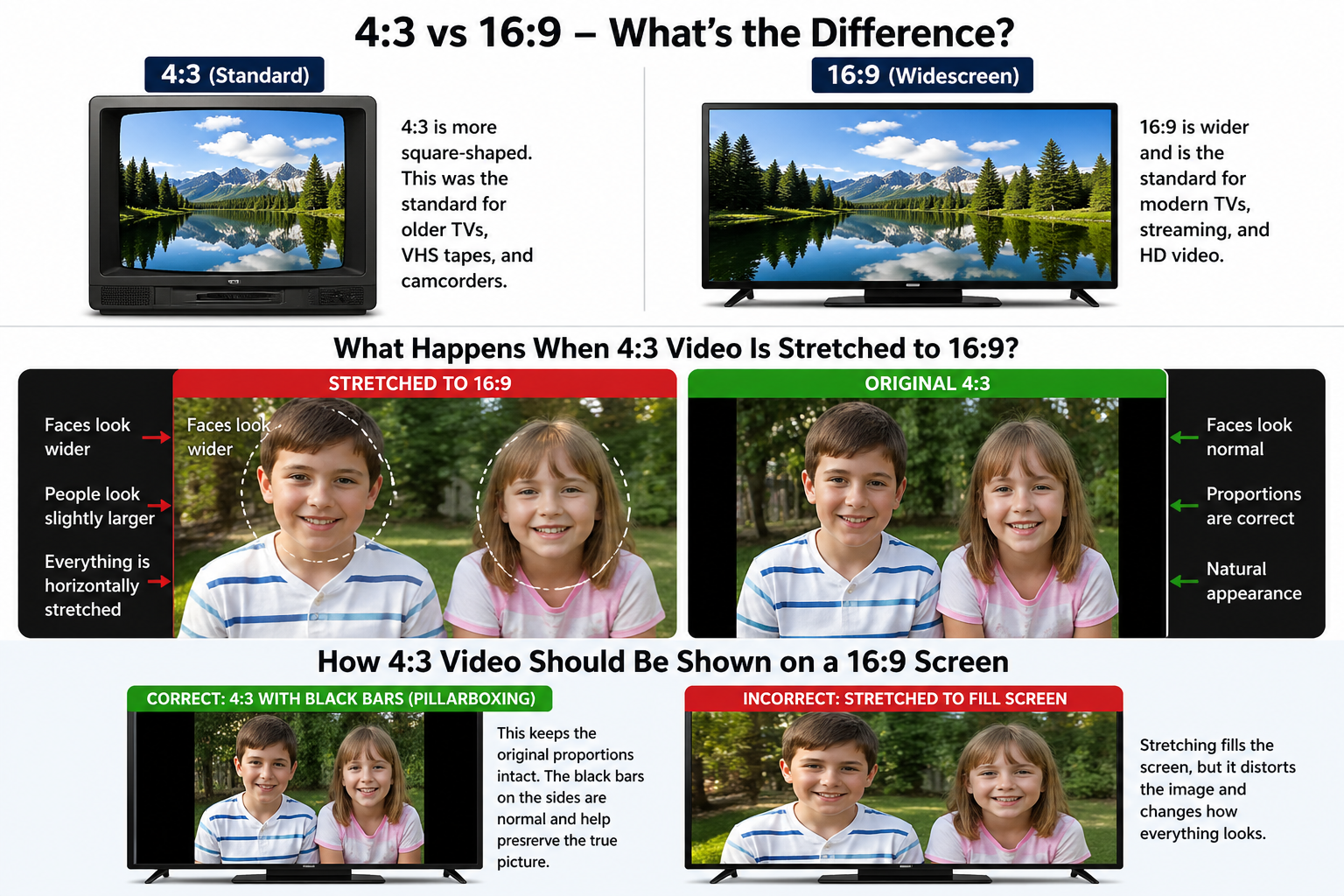
What is Aspect Ratio Anyway?
If you’ve ever watched an old home video and thought something didn’t look quite right, you’re not alone.
Sometimes people look a little wider than they should. Faces seem stretched. It’s subtle—but noticeable.
That usually comes down to something called aspect ratio.
So What Does That Actually Mean?
Aspect ratio is just the shape of the video frame.
4:3 → older TVs, VHS tapes, camcorders
16:9 → modern TVs and streaming
Most older home videos were recorded in 4:3. That was the standard at the time.
What Happens When 4:3 Gets Stretched?
When a 4:3 video is stretched to fill a widescreen TV, nothing new is added—it just gets pulled sideways.
That leads to:
Faces looking wider
People appearing slightly larger
Shapes getting distorted
It’s not extreme, but it’s enough to make things look off?
What Should It Look Like Instead?
The right way to display older footage is to keep it in its original format.
That means a 4:3 video stays 4:3.
On a modern TV, you’ll see black bars on the sides. That’s normal—and it’s what keeps everything in the correct proportions.
Why This Matters
For most people, it just comes down to making sure videos look the way they’re supposed to.
But it also affects accuracy:
Faces look natural
Proportions stay correct
Nothing is unintentionally distorted
Even small stretching changes how things appear.
Simple Takeaway
Most older videos are 4:3
Modern screens are 16:9
Stretching changes the image
Same video—just displayed correctly makes all the difference.
A Quick Note from SnapCache
At SnapCache, we keep videos in their original format so they look the way they were meant to.
No stretching—just a clean, accurate transfer.
