
Preserve your recordings
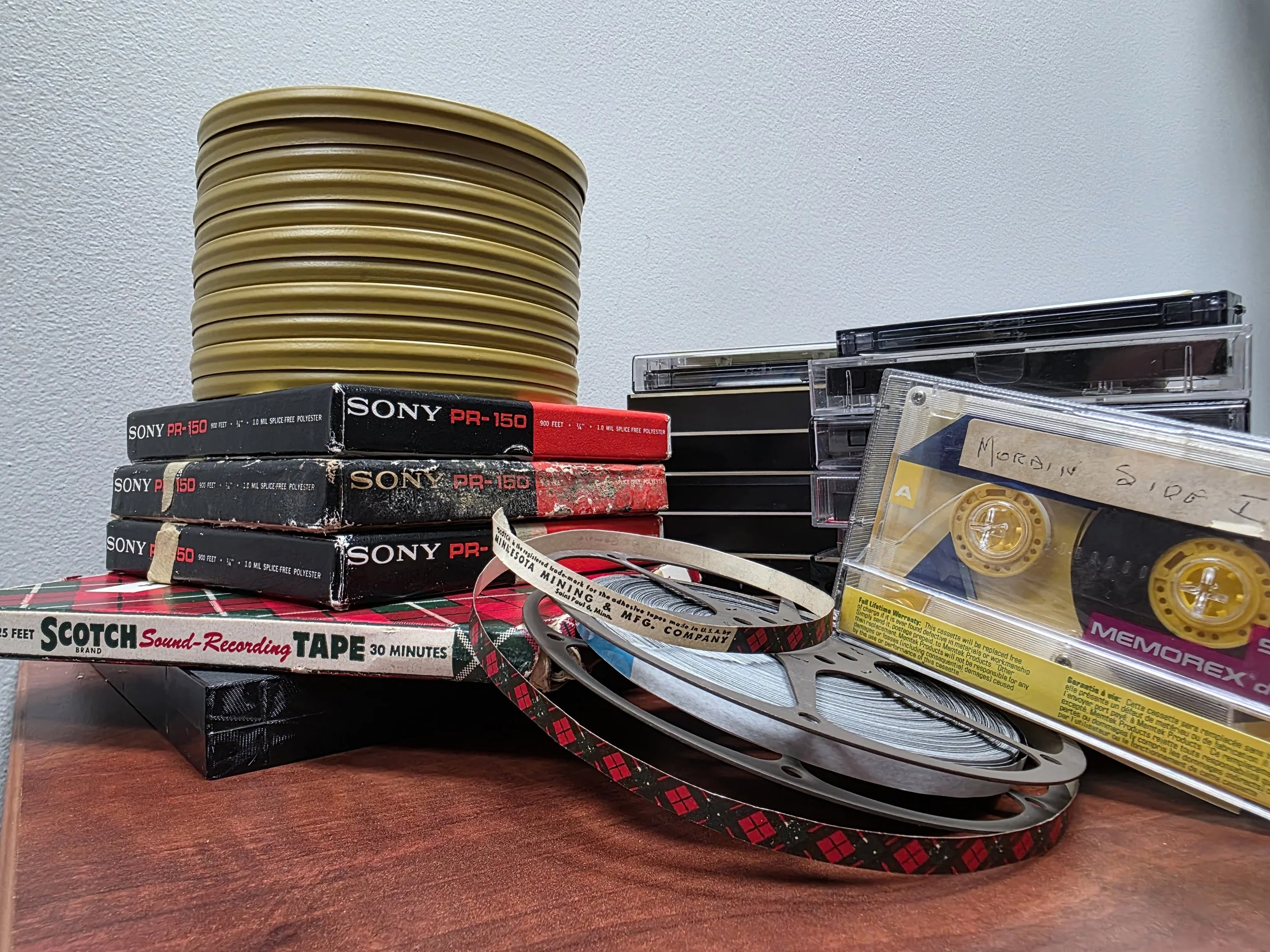
Cassettes • Microcassettes • Reel-to-Reel (7½, 3¾, & 1⅞ IPS)
Digitized to MP3, WAV, or FLAC
Your family’s old audio recordings hold moments that will never happen again. We safely digitize every cassette, microcassette, and reel-to-reel tape using high-quality, in-house decks right here in Mason City, IA.
Northern Iowa & Southern Minnesota’s trusted audio-to-digital service.
641-200-4190
⭐ 5-Star Google Reviews
A reputation built on great service
Supporting Families & Businesses Across North Iowa


Choose Your Audio Type
Quick pricing for every format
-
Cassette or Microcassette - $25 per tape
Includes:
Cleaning & inspection
Speed-calibrated playback
Full tape digitization to MP3, WAV, or FLAC
Basic volume normalization
File naming and folder organization
Optional Enhancements:
Track Splitting - $2 per track
Tape Repair/Splicing - $10 per tape
-
Reel-to-Reel — $45 per reel
Speeds supported: 7½, 3¾, and 1⅞ IPS
Formats: 2-track & monoIncludes:
Gentle cleaning and tension check
Professional reel-to-reel deck transfer
Output as MP3, WAV, or FLAC
File labeling and organization
Optional Enhancements:
Track Splitting — $2 per track
Tape Repair/Splicing — $10 per reel
-
Audio Enhancements (Optional)
Track Splitting — $1 per track
Tape Repair / Splicing — $10 per tape
Advanced File Formats — MP3, WAV, FLAC (Upon request)
Noise Reduction & Cleanup — Included
AUDIO DIGITIZING
Starting at $25 per tape
Blank tapes, unplayable recordings, or tapes under 5 minutes are free of charge.
All audio is digitized in-house using dedicated decks, no outsourcing, no combo DVD/audio machines, and no AI “guesswork.”
You receive clean, high-quality digital files you can save, share, or archive forever.
CASSETTE & MICROCASSETTE DIGITIZING
Ideal for:
Music recordings
Interviews and oral histories
Family messages & childhood recordings
Lecture notes, meetings, and storytelling
What you get:
Cleaned and inspected tape
High-quality playback using calibrated decks
Output as MP3, WAV, or FLAC
REEL-TO-REEL DIGITIZING
Best for:
Legacy family recordings
Church services or choir recordings
Bands, studio demos, and musician archives
Archival restoration
What you get:
Gentle tape cleaning and tension check
Stable playback using professional reel decks
Output as MP3, WAV, or FLAC
AUDIO OPTIONS & ADD-ONS
Track Splitting - $1 per track
We separate long recordings into individual labeled files.
Tape Repair / Splicing - $10 per tape
Fixes broken tape, jams, leader tape repair, or splice failures.
Advanced File Formats Included Upon Request
MP3 (standard), WAV (archival), or FLAC (lossless compressed).
No additional charge.
WHY DIGITIZING AUDIO MATTERS TODAY
Magnetic audio tape was never designed to last forever. As tapes age, the materials that hold the recording can gradually deteriorate, especially after decades of storage and repeated playback. Heat, humidity, dust, improper storage, and the natural aging of the tape itself can all affect sound quality and playability. In some cases, deterioration may not become obvious until a tape is played again. Older recordings may experience fading audio, increased noise, distortion, physical damage, or playback problems caused by:
Loss of magnetic signal and reduced fidelity
“Sticky-shed syndrome” (binder breakdown)
Print-through (echoing of previous recordings)
Wobble, distortion, and pitch instability
Mold growth on the tape surface
Breaks in thin cassette or microcassette tape
Playback equipment becoming rare and unreliable
Digitizing preserves the recording in its current condition, protecting the voices, music, and moments stored on these aging formats before further deterioration occurs.
Your Home Audio recordings are not getting any Younger
You still want to remember what those sounded like, right?…..Right?!!?
Hit the button below to get started!